
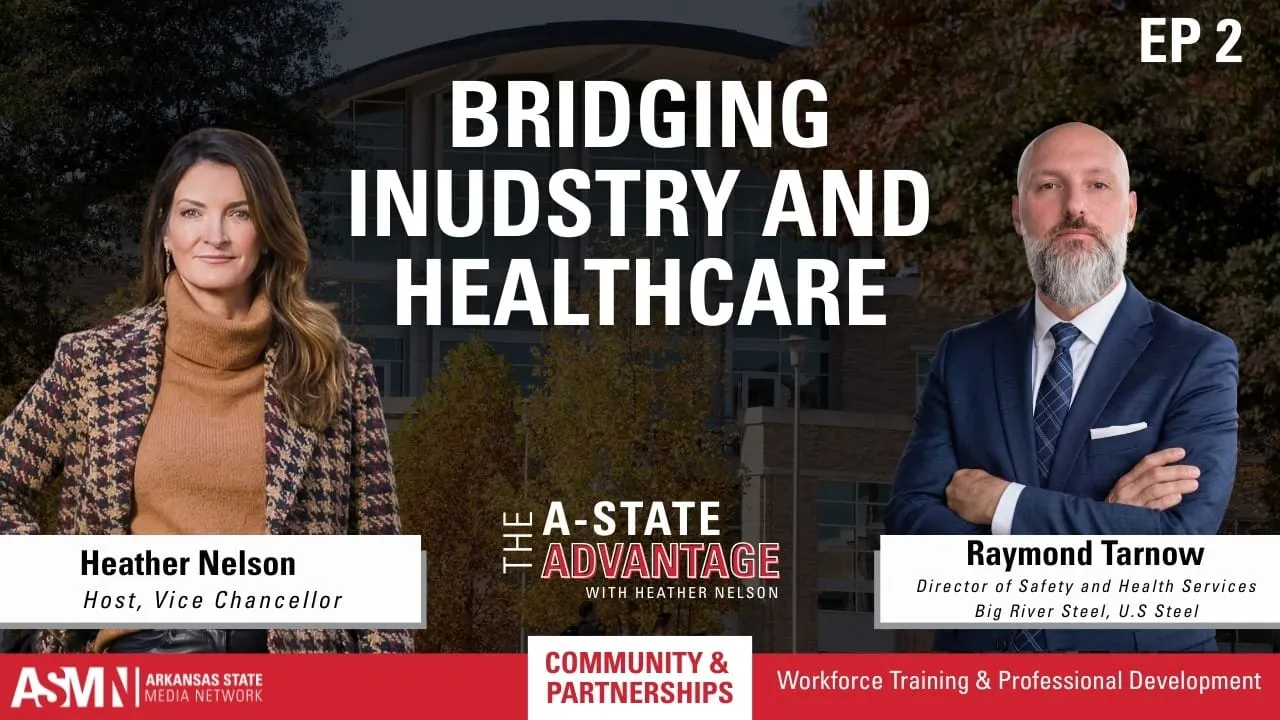
Steel has a reputation for being dirty and dangerous, but that framing misses the real point. When you’re working around heat, heavy equipment, and molten metal, the job is unforgiving, and that means the difference between a safe shift and a life-changing injury comes down to culture, systems, and leadership that refuses to bend.
We sit down with Raymond Tarnow, Director of Safety and Health Services at Big River Steel, to talk about how a modern steelmaker builds safety into the day-to-day. Raymond shares why accountability has to “trickle down” from plant leadership, why safety can’t live in a department or a poster, and what it looks like to lead a team that won’t accept average. He also explains how protecting paychecks and family stability becomes a core part of occupational health when you focus on keeping people healthy and able to work.
Then we get into the most unexpected part of the story: Big River Steel’s on-site clinic partnership with Arkansas State University, plus a growing pipeline for nursing students through A-State and ANC. You’ll hear how preventive care and basic vitals checks can catch emergencies early, why nursing students gain rare occupational health experience on the plant floor, and how the “industrial athlete” mindset helps tackle extreme heat stress with hydration, cooling tech, rest, and recovery.
If you care about workplace safety, occupational health, leadership, or real industry-university partnerships, subscribe for more conversations like this, share the episode with someone in manufacturing, and leave a review with your biggest takeaway.
More About this Episode
The Unforgiving Heat: Safety Innovation and the Industrial Athlete at Big River Steel
In the heart of Mississippi County, Arkansas, the largest steel-producing county in the United States, the industry is shedding its reputation as a "dirty and dangerous" relic of the past. At Big River Steel, the narrative has shifted toward high-tech innovation and a sophisticated culture of protection.
For Raymond Tarnow, Director of Safety and Health Services, the mission is personal. A fourth-generation steelworker who spent a decade at the legendary Gary Works in Indiana, Tarnow moved south to join a team that views its workforce not just as employees, but as elite performers.
Redefining Danger as "Unforgiving"
One of the most significant cultural shifts at Big River Steel is the language used to describe the work. Tarnow pushes back against the label of "dangerous," preferring the term "unforgiving."
The distinction is critical: danger implies a lack of control, whereas an unforgiving environment rewards discipline and punishes negligence. The steel mill is a place where rules, procedures, and personal protective equipment (PPE) are the difference between a successful shift and a life-altering injury.
By establishing that the environment is unforgiving rather than inherently malicious, the safety team empowers workers to take total ownership of their actions.
The On-Site Clinic and Preventive Care
In a move that defies traditional industry norms, Big River Steel operates an on-site family practice clinic in partnership with Arkansas State University (A-State). This facility addresses the unique challenges of steelworkers who often work demanding 12-hour rotating shifts, making standard doctor appointments difficult to schedule.
The clinic serves several vital functions:
- Accessibility: Providing immediate care for minor ailments and chronic condition management without leaving the site.
- Life-Saving Intervention: In one instance, an employee came in for a routine hearing test; the staff noticed abnormal vitals and urged him to go to the hospital immediately, preventing a fatal medical event.
- Workforce Stability: Keeping team members healthy ensures they maintain their full earning potential and provides stability for their families.
Building the Nursing Pipeline
The partnership with A-State and Arkansas Northeastern College (ANC) has created a unique "occupational setting" training ground for nursing students. These students gain hands-on experience in a high-stakes industrial environment, learning skills they wouldn't acquire in a standard family practice.
For Big River Steel, this creates a recruitment pipeline for highly trained nurse practitioners and LPNs who already understand the nuances of the steel industry. The company even invests in its existing staff, paying for current RNs to return to A-State for advanced degrees.
The Concept of the Industrial Athlete
Perhaps the most forward-thinking initiative at Big River Steel is the "Industrial Athlete" program.
Tarnow and his team treat steelworkers with the same level of physiological scrutiny as a professional football player. On the casting floor, where temperatures can soar between 140°F and 160°F, workers wear three layers of protective gear.
To combat heat stress, which is the safety department's number one concern, the company has looked to collegiate athletics for solutions:
- Advanced Hydration: Moving beyond water to specialized electrolytes and spending over $500,000 annually on fresh fruit for hydration.
- Cooling Technology: Utilizing gel-activated vests that freeze in minutes when water is added, providing immediate relief for workers entering the early stages of heat exhaustion.
- Physiological Recovery: Exploring the use of ice baths and dunk tanks, similar to those used on the sidelines of a football game, to lower internal body temperatures during breaks.
Leadership and the Workforce Continuum
Tarnow’s leadership philosophy is built on the idea that "average is crowded." He encourages his team to outwork him and seeks to replace himself with leaders he has trained. This mirrors the broader vision of "Workforce Development Continuum" championed by Arkansas State University.
Rather than just producing graduates, the goal is to provide education at every level, from certifications and trades to PhDs, ensuring that the steel industry has the intellectual and physical talent it needs to lead North America for generations to come.