
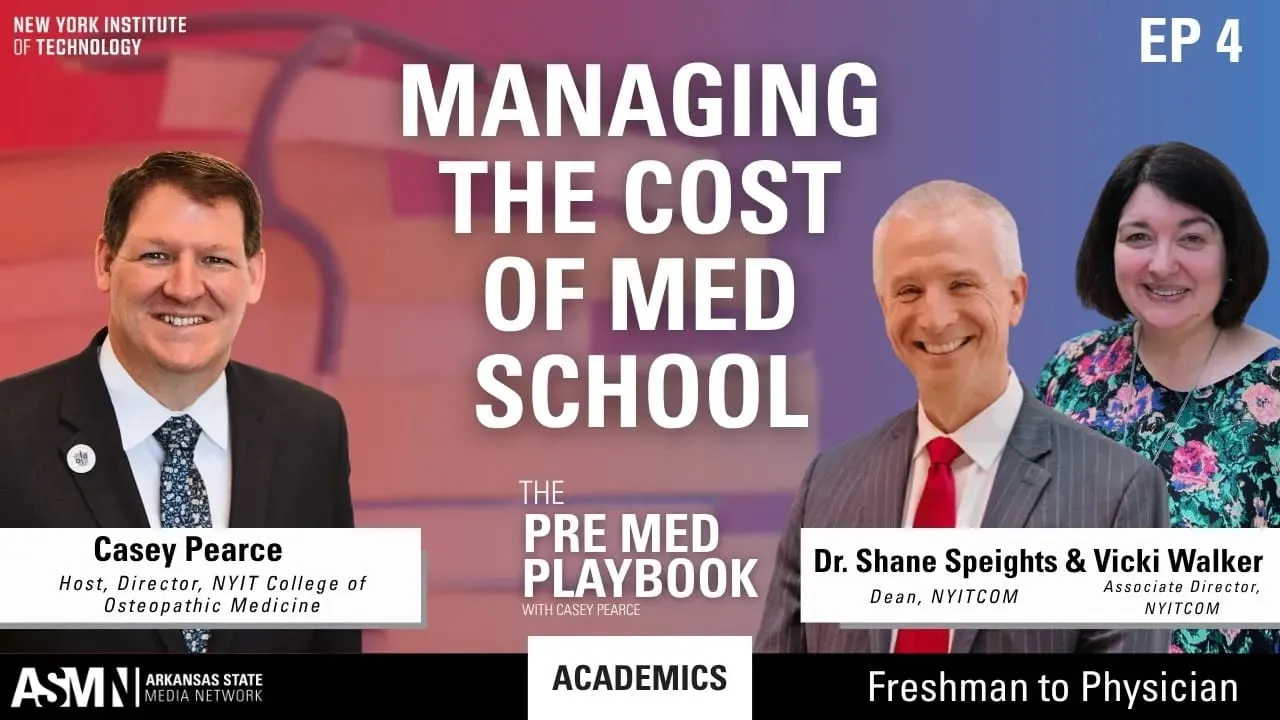
The number that freaks people out is easy to say and hard to picture: $300,000. We wanted to slow that down and make it real, so we sat with Dr. Shane Speights, Dean of NYIT College of Osteopathic Medicine at Arkansas State, and Dr. Vicki Walker, our associate director of financial aid and registration, to talk plainly about the true cost of medical school and how students actually pay for it.
We start where every plan should start: the FAFSA (Free Application for Federal Student Aid) and the federal direct loan process. Dr. Walker explains how FAFSA simplification makes the paperwork less intimidating, and why meeting one-on-one to build a personal budget can keep you from borrowing more than you need. We also unpack why private medical schools often have higher tuition than public schools, and how cost of living plays a huge role in your total debt, especially if you choose a city where rent and utilities are lower.
Then we tackle the hard stuff: national changes that limit federal borrowing and can push students toward private student loans. Dr. Speights brings the perspective of someone who financed medical school with private loans and still carries some today, and he walks through the context students miss most: repayment happens over decades, not semesters. We talk monthly payments, prioritizing higher-interest debt, why working during medical school is rarely realistic, and the real-world options that can reduce debt, including scholarships, need-based grants, employer loan repayment, rural service incentives, the National Health Service Corps, and military pathways. Dr. Walker also shares a key practical takeaway for today’s lending reality: protect your credit score early because it can determine your interest rate and whether you need a cosigner.
If you’re weighing acceptance letters against a price tag, this conversation is for you. Subscribe for more practical premed guidance, share this with a friend who’s stressed about money, and leave a review with the biggest question you still have about paying for medical school.
@Arkansasstatemedianetwork.com.