
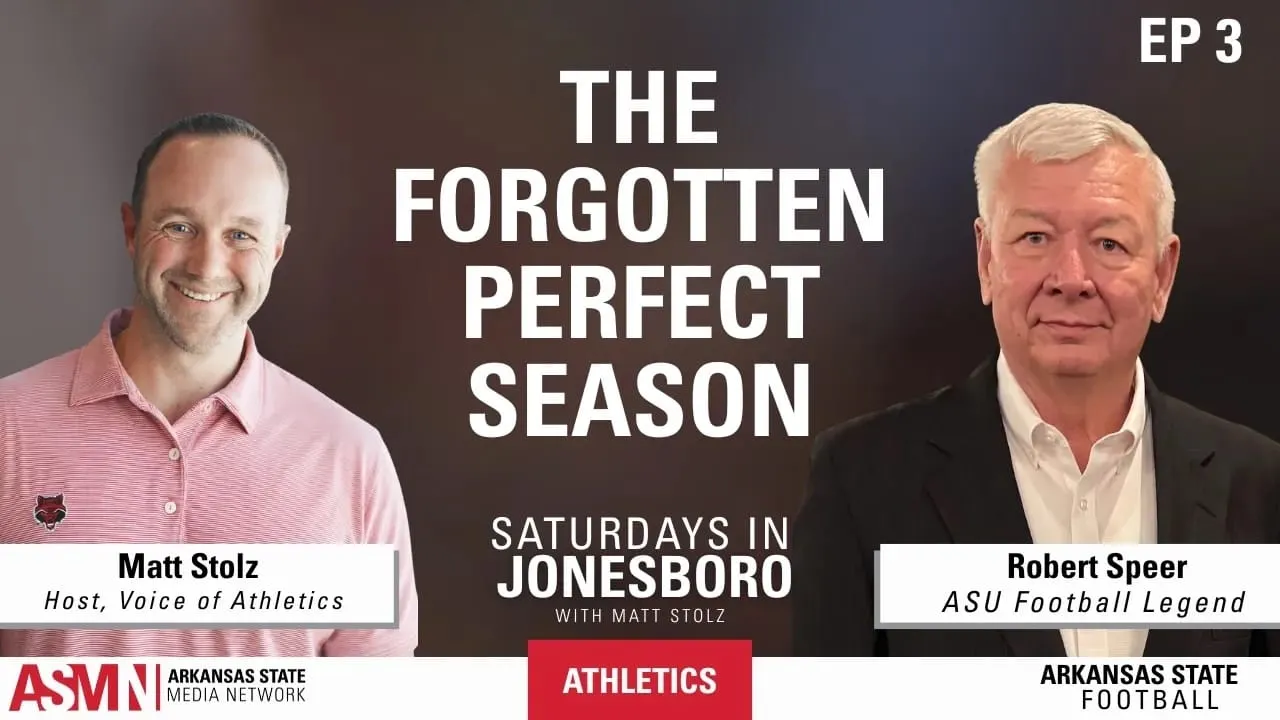
An undefeated 11-0 team with no bowl invite sounds impossible now, but Arkansas State lived it, and the echoes still shape how we talk about fairness, money, and recognition in college football. We’re joined by Jonesboro native and A-State Hall of Honor defensive end Robert Speer, a walking historian with stories that stretch from the 1960s to today’s Red Wolves era.
We go back to the roots: growing up around A-State coaches, falling in love with the program before ever wearing a uniform, and navigating a recruiting world that relied on landlines, persistence, and personal pressure. Robert also relives a legendary Arkansas high school football moment, a seven-quarter state championship played in freezing rain and mud, and then brings us onto campus for the final season at Kays Field, where students walked in, the stands shook, and game day traditions included the Indian family ceremonies and a horse sprinting the track after touchdowns.
From there, the conversation opens up into the Louisiana Tech rivalry, the grassroots effort that built what fans now know as Centennial Bank Stadium, and the blueprint behind the dominant 1975 Arkansas State football season. We also talk about the history that can disappear if nobody records it, including the experiences of early Black athletes at A-State, and why those voices deserve time, respect, and urgency.
If you care about Arkansas State Red Wolves football, Sun Belt Conference history, stadium traditions, or the human side of college athletics, hit subscribe, share this with an A-State fan, and leave a review. What’s one Arkansas State story you think needs to be recorded before it’s gone? @Arkansasstatemedianetwork.com.
More About this Episode
The Heart of Arkansas State Football: A Conversation with Robert Speer
In the latest episode of "Saturdays in Jonesboro," host Matt Stolz sat down with a true pillar of the Arkansas State community: Hall of Honor member Robert Speer. A Jonesboro native and former star defensive end, Speer’s history with the university spans over six decades—from a ten-year-old boy watching legends at his neighbor's house to a 50-year veteran of the sidelines.
From Neighborhood Fan to Indian Hero
Speer’s connection to Arkansas State began long before he ever donned the jersey. Growing up in Jonesboro, his neighbor was the legendary offensive line coach Bill Davidson. Speer recalled the awe of seeing 1960s football heroes visit the house, men who seemed like giants to a young boy.
Despite interest from schools like the University of Arkansas, Speer’s loyalty remained local. He reminisced about his high school days at Jonesboro High, including a legendary seven-quarter state championship game against Hot Springs that ended in a 14-14 tie at midnight under freezing rain and mud.
The Kays Field Era and Lost Traditions
Speer provided a vivid window into the atmosphere of Kays Field, the university’s home before the current stadium was built. With a capacity of about 7,500, the stadium offered an intimate environment where students walked across campus to attend games. Speer shared memories of the unique traditions that defined that era:
- The Indian Family: Authentic tributes to Indian heritage featuring a Brave, Princess, and Chief.
- The Charging Horse: A horse that would gallop around the cinder track after every touchdown – a task that became exhausting during a record-setting 56-46 victory over Abilene Christian.
- Locker Room Intimidation: The dressing rooms were located directly beneath the metal stands, allowing players to hear the rhythmic stomping of fans overhead before taking the field.
The Undefeated 1975 Season: A Defensive Masterclass
As a key member of the 1975 team, Speer was part of what many consider the greatest defense in school history. That squad went 11-0, giving up an average of just over seven points per game and recording three shutouts.
The defense featured legendary names like Jerry Muckensturm and Mike Malham, led by ex-Marine and defensive coordinator Mike Malham Sr. Despite their perfection on the field, the team was infamously snubbed by the bowl system due to the financial guarantees required at the time: a slight so significant it led to the creation of the Independence Bowl.
Breaking Barriers: The First African-American Athletes
One of Speer’s most passionate topics was the legacy of the first Black athletes at Arkansas State. He highlighted the courage of players like Joe Holliman, David Mitchell, and Ron Meeks, who navigated significant social discrimination to pave the way for future generations.
Speer shared the moving story of Holliman, who grew up on a plantation in Truman and didn't have indoor plumbing until he arrived at college. Despite being a premier athlete, Holliman faced immense hurdles in recruiting and travel, yet went on to a Hall of Fame career in the CFL. Speer emphasized that today’s student-athletes stand on the shoulders of these pioneers.
A Lifetime on the Sidelines
After his playing days, Speer served a long and distinguished career as an Arkansas State Trooper. This professional background allowed him to remain a fixture of the football program, often traveling with the team and serving as a bridge between the athletes and law enforcement.
Today, Speer remains active by driving teams to the airport, a role that allows him to build relationships with athletes across all sports, from the national-contending bowling team to the international stars of the women's tennis team.
Robert Speer’s story is a testament to the fact that while the facilities and technology of college football have evolved, the core of the Arkansas State experience remains the same: a deep-rooted sense of community and a bond between teammates that lasts a lifetime.