
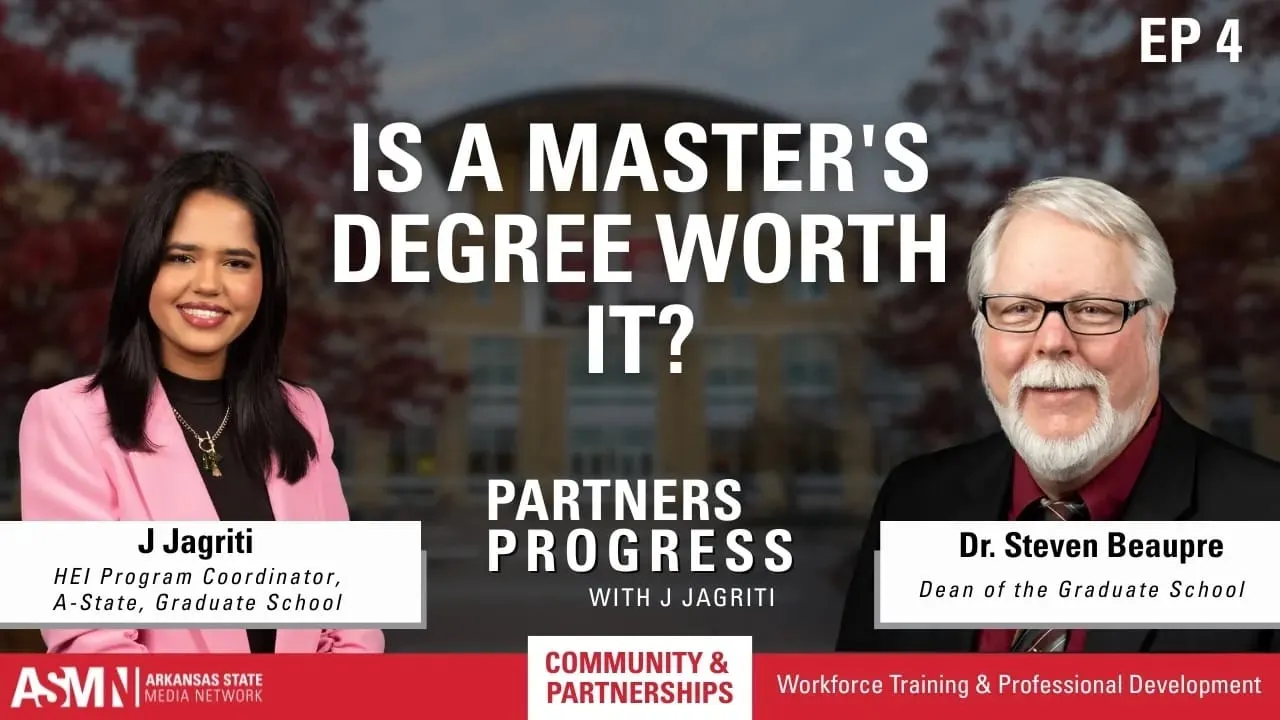
Measuring the value of higher education purely through entry-level salary statistics is a shortsighted strategy that compromises long-term workforce capability. As regional economies face severe structural shortages in critical sectors like healthcare and education, institutions must rapidly optimize how they train mid-level managers and expert personnel to drive real-world economic expansion. We sit down with Dr. Steven Beaupre, Dean of the Graduate School at Arkansas State University, to discuss the high-stakes responsibility of running the largest graduate infrastructure in the state and aligning advanced degrees with systemic regional demands.
We get into the tactical architecture required to manage advanced programs serving thousands of students across 60 distinct areas of study. Our conversation maps out the logistics of feeding critical healthcare pipelines in rural environments, expanding department staff to handle post-pandemic enrollment surges, and the strategic milestones necessary to elevate the campus from R2 to R1 research status. Dr. Beaupre shares his unique perspective on viewing academic leadership not as a bureaucratic constraint, but as a genuine impact multiplier that takes specialized field data and uses it to transform foundational institutional frameworks.
The harsh reality of expanding a competitive graduate framework involves entering a brutal national market where regional institutions must actively fight to attract elite talent. Leadership must confront glaring structural deficits in graduate assistantships, specifically regarding tuition breaks, health insurance accessibility, and competitive baseline stipends. Viewers will walk away with a functional understanding of how to audit internal budgets, reject vanity academic metrics, and successfully reallocate surplus funds directly back into student-level talent assets.
If you care about regional workforce development, institutional scaling, and the real-world economics of higher education, you’ll get a lot from this. Please subscribe to the channel and share this episode with an industry or education leader looking to scale their impact. What is the most critical benefit or structural adjustment needed to retain top-tier talent in your local workforce? Let us know in the comments below.
@Arkansasstatemedianetwork.com.
More About this Episode
Driving the Future of Higher Education: Why Graduate School is the Ultimate Impact Multiplier
When we consider the landscape of higher education today, a common debate surfaces regarding the true value of pursuing an advanced degree. With changing economic conditions and shifting federal policies, prospective students are understandably curious about the return on their educational investment. However, evaluating a graduate program strictly through the lens of entry-level salaries completely misses the transformative power of advanced academic training. At Arkansas State University, home to the largest graduate school in the state, the mission goes far beyond simple job placement. It is about fostering lifelong learners, addressing critical rural workforce shortages, and building a high-functioning research institution that shapes the future of the global economy.
As someone who traveled to the United States as an international student to pursue higher education, I have experienced firsthand the incredible doors that a graduate degree can open. The transition from seeking personal career advancement to understanding how entire universities scale their societal impact is a fascinating journey. By analyzing the strategic direction of modern graduate schools, we can clearly see how higher education serves as an engine for both individual fulfillment and massive community development.
The Philosophy of Administration as an Impact Multiplier
A common sentiment among dedicated academics and researchers is a reluctance to step into administrative roles. For scholars who have spent their entire careers in laboratories or fieldwork, the prospect of managing budgets and policies can seem disconnected from the passion that initially drew them to academia. However, stepping into leadership presents a unique opportunity to scale one's influence.
Rather than viewing university administration as bureaucratic oversight, it is much more accurate to describe it as an impact multiplier. When a faculty member mentors a handful of master's or doctoral students in a single laboratory, their impact is deeply profound but localized. Stepping into a leadership role, such as the dean of a graduate school, shifts the paradigm entirely. The core objective becomes figuring out how to transport the success found in a single laboratory to an entire institution.
By shaping policies that support thousands of students across dozens of disciplines, university leaders place individuals in positions to excel. These graduates then disperse across the globe, transforming workplaces, innovating in tech giants, and improving their home communities. The ultimate payoff of educational leadership is not just maintaining enrollment numbers. It is putting people in positions where they can have a massive, positive impact on society.
Redefining the Return on Investment for Graduate Degrees
There is an ongoing national conversation, often driven by federal government scrutiny, regarding whether graduate degrees are worth the financial and temporal investment. Policymakers frequently attempt to justify degree programs based entirely on whether a graduate student can secure a highly lucrative job immediately upon graduation. While securing a strong entry-level salary is certainly a valid way to look at graduate education, it is a vastly incomplete metric.
Students gain rigorous, multifaceted training in their graduate programs that they often apply to entirely different professional fields. A degree does not lock a student into a single narrow corridor. Instead, it provides them with a highly transportable skill set. The most valuable assets gained in graduate school are the mindset of critical thinking, the ability to manage complex projects, and the soft skills required to collaborate with diverse groups of people.
These capabilities are precisely why individuals with advanced degrees make exceptional mid-level managers and visionary corporate executives. They are trained to think broadly and solve unstructured problems. Therefore, we must evaluate the real impacts of a graduate degree not only in a personal financial sense but also by looking at the immense value these highly trained individuals bring to the institutions and corporations they eventually lead.
Furthermore, human ambition cannot be reduced to a simple financial equation. People choose their career paths because they are intrinsically drawn to a specific field of study. Just as someone might prefer a certain flavor of ice cream without needing a calculated justification, students pursue advanced degrees in specific disciplines because they possess a deep, inherent passion for the subject matter. If a university maintains high enrollment in a program that leads students to deeply fulfilling careers, the exact monetary comparison relative to other degrees becomes less important. True happiness and professional satisfaction are found by pursuing the things you are passionate about, and formal graduate training sharpens that passion into exceptional expertise.
Empowering International and Domestic Students Alike
The scope of a major university reaches far beyond its immediate geographic borders. Graduate schools today serve a highly diverse population, combining strong domestic enrollment with a robust international student component. For international students, gaining admission into an American graduate program is often a life-altering milestone. It provides an alternative to restrictive cultural norms in their home countries and opens up a global landscape of professional opportunities.
The living conditions, academic resources, and networking opportunities available at American institutions offer an unparalleled foundation for success. Graduates from these programs do not simply blend into the background. They go on to secure positions at major global corporations like Amazon, Microsoft, and Google. In many cases, these brilliant minds eventually return to their home countries, bringing back advanced knowledge and contributing heavily to their local economies.
Higher education does not limit what a person can do. Instead, it glorifies and refines their existing talents, showing them better and more efficient pathways to achieve their ultimate goals. A robust graduate program functions as a massive door-opening operation, providing access to rooms and conversations that would have otherwise remained closed.
Addressing Critical Workforce Needs in Rural Areas
While the global impact of graduate education is undeniable, the local and regional impacts are equally vital. In rural areas across the country, there are urgent and critical workforce needs, most notably in the healthcare and education sectors. Graduate schools are directly addressing these shortages by intentionally feeding highly trained professionals into the local industry pipeline.
Colleges of nursing and health professions are actively producing the next generation of essential workers. These comprehensive programs include:
- Doctors of Physical Therapy
- Doctors of Occupational Therapy
- Doctors of Nursing Practice
- Emergency Preparedness and Disaster Management Experts
Students in these disciplines do not just sit in classrooms. They engage in intensive internships and clinical rotations directly within the community. In the field of education, graduate students frequently leverage their advanced degree studies with their current places of employment, immediately applying new pedagogical strategies to local classrooms.
One of the most exciting aspects of this educational model is the retention of local talent. Universities draw bright minds from rural and underserved regions, provide them with top-tier advanced training, and seamlessly transition them back into those same communities as highly qualified professionals. These are the individuals who will be providing primary medical care, managing local hospitals, and teaching the next generation of children. Creating this self-sustaining ecosystem of professional talent is one of the most vital functions a regional university can perform.
The Strategic Push for R1 Research Classification
Looking toward the future, many high-functioning regional universities share a common, ambitious goal. They want to transition from an R2 research categorization to the highly prestigious R1 status. Achieving this elite classification requires more than just dedicated faculty. It requires a highly competitive, top-tier graduate school that can attract the absolute best academic talent on a national and international level.
The engine that drives a research university is its graduate assistants. These individuals are hired by the university to conduct vital research, assist in teaching, and help the institution deliver its core educational products. To build a graduate school capable of supporting an R1 transition, universities must ensure they are treating these essential workers competitively.
There are three primary pillars required to make graduate assistantships competitive in the modern academic landscape:
- Comprehensive Tuition Benefits: Graduate assistants dedicate roughly twenty hours a week to working for the university. In exchange for this labor, providing a substantial tuition break is standard practice among top-tier research institutions.
- Health Insurance Coverage: Providing reliable healthcare benefits ensures that graduate students can focus entirely on their rigorous academic and research duties without the stress of medical financial instability.
- Competitive Stipends: To attract top talent away from other national programs, universities must offer living stipends that accurately reflect the current cost of living and the high value of the labor being provided.
Addressing these three areas requires a massive strategic and financial lift. It involves complex rebudgeting, generating new funding streams, and fundamentally reevaluating institutional priorities. However, accomplishing this transformation is an absolute game changer. When a university can offer financial packages that rival those of national competitors, they secure the brightest minds in the world to conduct groundbreaking research on its campus.
Even in the early stages of this strategic shift, proactive graduate schools are finding ways to immediately support their students. By reallocating surplus budget funds directly into students' hands through academic scholarships and project grants, universities can provide immediate financial relief while building the foundation for long-term systemic changes.
Fulfilling the Ultimate Academic Mission
At its core, the primary goal of any higher education institution should be remarkably simple yet profoundly ambitious. A graduate school must strive to serve every single student to their absolute fullest potential. Whether a student is pursuing a degree in the humanities, dedicating their life to ecological research, or preparing to manage a rural hospital, the university's role is to remove barriers and provide world-class training.
By focusing relentlessly on student success, optimizing the administrative impact multiplier, and continuously fighting for better resources for graduate assistants, universities can elevate their entire academic standing. The journey toward becoming a nationally recognized, high research institution is paved with the individual successes of its graduates. As we look to the future of higher education, it is clear that investing heavily in graduate programs is not just a benefit to the students. It is an investment in the health, prosperity, and innovation of the entire world.