
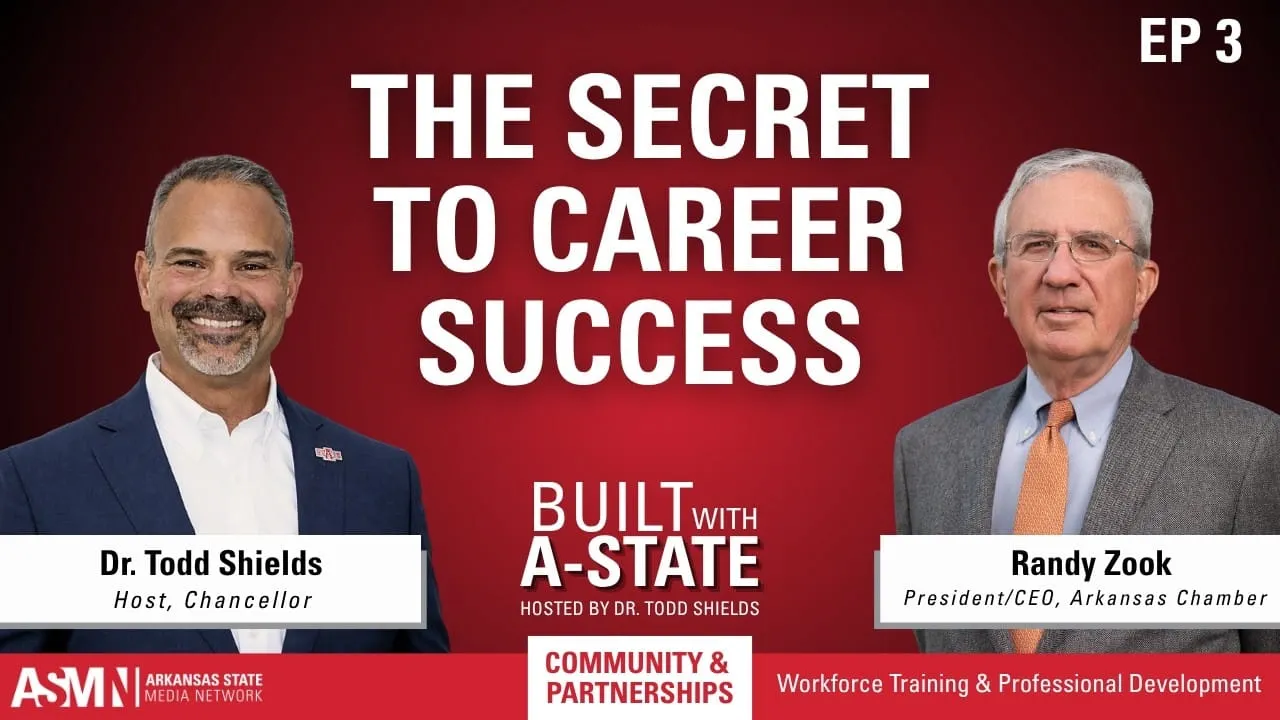
If you’ve ever wondered why smart, capable people still struggle to land or keep good jobs, the answer often isn’t technical knowledge. It’s the basics employers can’t hire without: showing up, communicating clearly, listening, following instructions, and finishing what you start. We talk with Randy Zook, President and CEO of the Arkansas State Chamber of Commerce, about the durable skills that companies across Arkansas keep asking for and why schools, colleges, and communities have to treat work experience like part of the curriculum, not an optional add-on.
From there, we zoom out to the bigger system shaping opportunity. Randy breaks down Issue 3 on the November ballot and explains how tools like tax increment financing and economic development districts can help communities pay for the infrastructure that makes housing, retail, and redevelopment possible. Arkansas is competing with states that already use these tools, and the challenge is making sure growth reaches more than a few hot spots, especially in the Delta and the eastern third of the state.
We also get practical about workforce development and the “workforce continuum” industries are demanding: short, targeted training that can move wages fast, plus upskilling in AI, automation, and cybersecurity that fits specific sectors like healthcare and manufacturing. We dig into Be Pro Be Proud’s mobile career exploration labs, why data literacy and statistics show up everywhere from quality to safety, and even why the next census count matters more than most people realize.
If you care about career readiness, skilled trades, higher education partnerships, or Arkansas economic development, hit subscribe, share this with a friend, and leave us a review so more people can find the conversation. What durable skill do you think matters most right now? @Arkansasstatemedianetwork.com.
More About this Episode
Arkansas State Leadership Discusses Workforce Innovation and Economic Growth
Arkansas State University Chancellor Todd Shields recently hosted Randy Zook, President and CEO of the Arkansas State Chamber of Commerce, on the Built at A-State podcast. Their conversation highlighted a shifting landscape in higher education where universities and industries collaborate to meet the demands of a modern workforce.
The primary takeaway centered on the necessity of durable skills and innovative financing tools to ensure long term prosperity across the Natural State.
Bridging the Gap Between Education and Industry
A significant portion of the discussion focused on the Catalyst event which brought together decision makers from industry and education. This initiative aims to align classroom learning with the practical needs of employers in regions like Northeast Arkansas. Zook noted that the most successful programs are those where thought leaders and those with resources share the same room to solve labor challenges.
The partnership between A-State and local industries is moving beyond traditional accreditation models. By listening to feedback from manufacturing plants and steel mills, the university can identify specific skill gaps. This allows for a more targeted approach to preparing students for the workforce before they graduate.
The Critical Importance of Durable Skills
Zook emphasized that technical proficiency is only one part of the equation for career success. Employers are increasingly looking for what he calls durable skills which include persistence and effective communication. These fundamental behaviors are essential for every profession from mechanical engineering to medical practice.
Many students, particularly those who are first generation college attendees, benefit greatly from explicit instruction in these areas. Teaching students how to show up on time and work within a team environment can be just as impactful as their academic coursework.
The goal is to ensure that every student has some form of work experience like an internship or apprenticeship prior to entering the job market.
Navigating Unforgiving Environments and Digital Habits
Safety remains a top priority for Arkansas industries especially in the booming steel sector. Zook shared insights from safety managers who describe industrial environments as safe but unforgiving. Success in these fields requires a strict adherence to rules and a high level of situational awareness.
The digital habits of the younger generation also play a role in workplace readiness. While students are often tech savvy they sometimes struggle with face to face interpersonal communication. Recent changes in K-12 cell phone policies have begun to encourage more direct interaction among students which leaders believe will benefit them in future professional settings.
Economic Tools for Community Development
The conversation shifted to legislative matters specifically focusing on Issue 3 regarding tax increment financing. This tool would allow Arkansas communities to use newly created tax revenue to underwrite the costs of development projects. Zook pointed out that Arkansas is currently one of only two states without this specific ability to attract investment capital.
Passing such measures could be vital for revitalizing the Delta and eastern portions of the state. While areas like Craighead County and Green County are seeing growth, many other counties are facing population declines. Implementing these financing tools could help attract essential businesses like grocery stores and housing developments to struggling regions.
Short Term Training and Lifelong Learning
Workforce development is also evolving through short term certificate programs and high tech training. Institutions like ASU Newport and Arkansas Northeastern College are leading the way with industry specific courses. These programs allow workers to gain new proficiencies in just a few weeks leading to immediate pay increases.
Specialized training in areas like ammonia refrigeration or programmable logic controllers can significantly boost a worker's earning potential. This model of education caters to adult learners in their 20s through 50s who need to upskill quickly. As technology like artificial intelligence becomes more prevalent these short term opportunities will be essential for keeping the Arkansas workforce competitive.
Arkansas on a Global Economic Stage
Zook shared optimistic statistics regarding the economic outlook of the state noting that Arkansas currently ranks very high nationally. Personal income growth in the state has outpaced the national average for several years. This upward trend is supported by massive capital investments in data centers and manufacturing facilities.
The state also benefits from a highly influential federal delegation in Washington D.C., which helps secure opportunities for local projects. With billions of dollars in investment underway the future of Arkansas appears bright. Leaders at A-State and the State Chamber remain committed to ensuring that every citizen has the skills necessary to participate in this growing economy.