
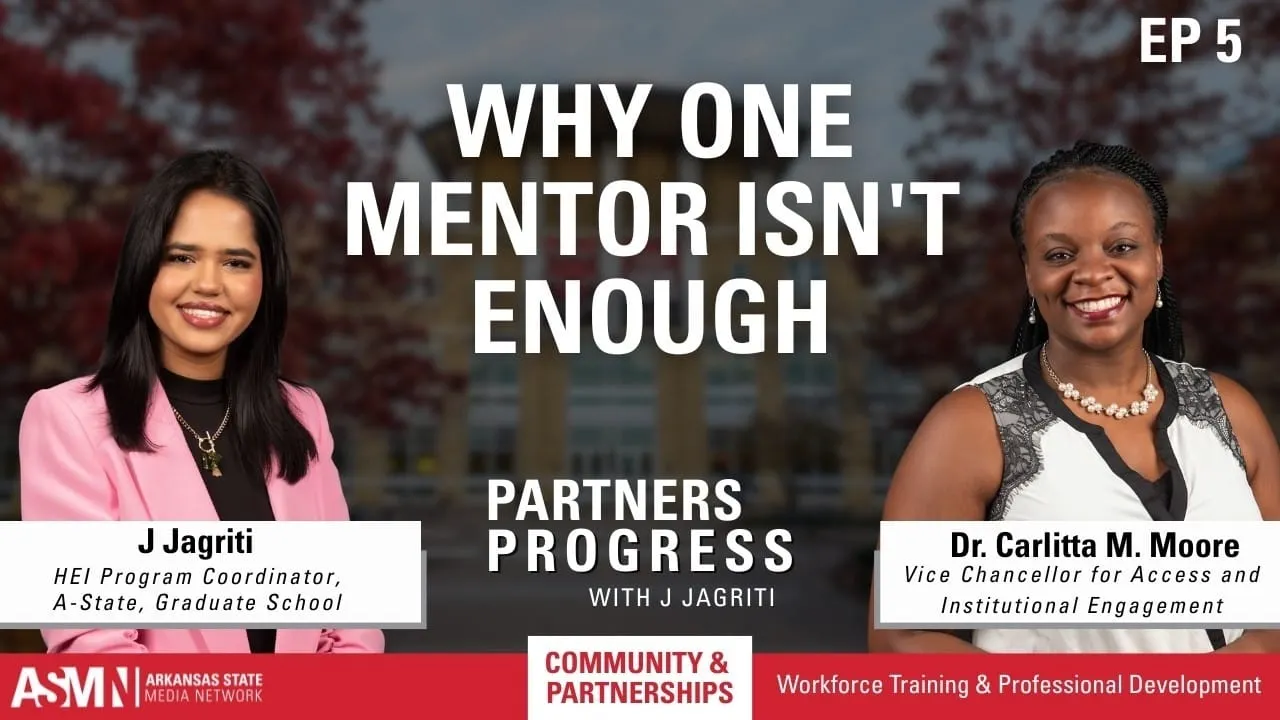
Navigating the transition from high school to college, or from a familiar hometown to a brand-new state, can be an isolating and overwhelming experience without the right support system. With higher education evolving rapidly and students facing entirely new academic and social pressures, understanding how to find mentorship and build a supportive community is critical for long-term success. Today, we sit down with Dr. Carlitta M. Moore, Vice Chancellor for Access and Institutional Engagement at Arkansas State University, to discuss her personal journey from North Carolina to Jonesboro and the philosophy behind her work in student and faculty engagement.
We get into the mechanics of effective mentorship, exploring why one mentor is rarely enough and how different guidance is needed for personal life, career growth, and day-to-day challenges. Our conversation covers the practical substance behind programs like A-State Inspire, which helps incoming students master time management and campus resources before classes even start. We also examine the importance of faculty innovation, sharing a compelling alumni success story of a student who built the confidence to present internationally and achieve a tenure-track professorship. At the core of Dr. Moore’s approach is a simple secret sauce: true leadership requires intention, vulnerability, and remaining genuinely accessible to meet people exactly where they are.
The reality of university life is that students often struggle with the unglamorous hurdles of adulthood, such as managing shifting daily schedules, dealing with academic setbacks, and learning how to navigate complex institutional ladders without feeling dismissed. We discuss the importance of listening to understand rather than simply responding and the necessity of building reciprocal mentoring relationships where both parties actively contribute. Viewers will walk away with a practical framework for seeking out constructive critique, advocating for themselves when they need help, and utilizing campus networks to avoid dead-end frustration.
If you care about higher education leadership, student development, and building meaningful mentorship networks, you’ll get a lot from this. Make sure to subscribe to the channel and share this episode with students, educators, or leaders who want to create more supportive institutions. What has been the most impactful piece of advice a mentor has ever given you? Share your experience in the comments below.
@arkansasstatemedianetwork.com.
More About this Episode
Transformative Mentorship and Intentional Leadership in Higher Education
Navigating the landscape of higher education requires more than just academic rigor; it demands a robust infrastructure of mentorship, community engagement, and intentional leadership. When we examine what makes a university thrive, the conversation inevitably turns to how institutions support their students, faculty, and staff through meaningful connections. In a deep dive into the evolution of student success and institutional engagement at Arkansas State University, Vice Chancellor for Access and Institutional Engagement Dr. Carlita Moore offers invaluable insights into the power of mentorship and the intentional strategies required to build a campus culture where everyone feels at home.
From her extensive background in sports medicine and educational leadership to her proactive approach to campus accessibility, Dr. Moore’s journey illuminates the critical role that mentorship plays in shaping the leaders of tomorrow. By exploring her philosophy, we uncover actionable strategies for fostering resilience, bridging the gap between high school and college, and building a reciprocal community across university departments.
The Journey to Arkansas State: Embracing New Horizons
Every leader brings a unique perspective shaped by their academic and professional pedigree. Dr. Moore’s path to educational leadership began in North Carolina, where she earned her bachelor's degree from Fayetteville State University before pursuing a master's degree in health and human performance with a concentration in athletic training at the University of Tennessee at Chattanooga. Her early career involved hands-on, high-intensity clinical work, transitioning from a physical therapy clinic to serving as an assistant athletic trainer at St. Augustine's University, and eventually returning to her alma mater, Fayetteville State, as the assistant athletics director for sports medicine and head athletic trainer.
However, an insatiable drive for lifelong learning pushed her to achieve a doctorate in educational leadership with a concentration in higher education. The transition from North Carolina to Jonesboro, Arkansas, serves as a powerful lesson in remaining open to unexpected opportunities. Shortly after successfully defending her doctoral dissertation, a phone call from a former professor and mentor, Dr. Scott Bruce, introduced her to Arkansas State University.
For many who have never visited the region, perceptions of Arkansas are often shaped by misconception. Driving past expansive rice fields, cornfields, and cotton fields into the heart of Jonesboro reveals a thriving, dynamic city and a vibrant university campus. Taking that leap of faith not only brought a visionary leader to A-State but also reinforced a core principle of personal and professional growth: sometimes, stepping into the unfamiliar leads you exactly where you are meant to be.
The Multi-Layered Philosophy of Mentorship
Mentorship is rarely a one-size-fits-all endeavor. Rather than looking for a single individual to guide every aspect of life, successful individuals build a diverse network of mentors. Mentorship begins much earlier than most people realize, often starting in elementary school with teachers who instill early foundational confidence before students even understand the concept of career guidance.
As students and professionals progress through their careers, their mentorship needs evolve into distinct categories:
- Career and Professional Guides: Individuals who offer strategic advice on industry standards, professional advancement, and navigating workplace dynamics.
- Role-Specific Advisors: Mentors who help you master the day-to-day responsibilities of your current job versus those who prepare you for the position you aspire to attain next.
- Personal and Emotional Support: Trusted confidants who act as sounding boards during moments of high stress, offering safe, judgment-free spaces to process difficult decisions.
- Spiritual and Wellness Counselors: Guides who focus on holistic well-being, ensuring that personal health and core values remain aligned with professional pursuits.
A critical insight from Dr. Moore’s approach to mentorship is the clear distinction between offering advice and dictating action. True mentors provide their mentees with the wisdom of their own experiences, presenting possibilities and potential outcomes without stripping the mentee of their autonomy. When a mentor shares an honest, transparent critique, it is designed to build and elevate the individual, not to diminish their efforts.
To gain the highest value from these relationships, mentees must practice self-reflection and active listening. Too often, during mentoring conversations, individuals listen merely to formulate a response or defend their actions rather than absorbing the underlying wisdom. Establishing clear intentions before entering a conversation—knowing whether you simply need to vent, are seeking actionable advice, or want constructive critique—transforms the mentorship experience into a catalyst for genuine development.
A-State Inspire: Bridging the High School to College Gap
One of the most critical touchpoints for student retention and success occurs before the autumn semester even begins. At Arkansas State University, the A-State Inspire program serves as an intensive, week-long leadership and mentoring initiative designed to ease the transition for incoming freshmen. Whether a student is a first-generation college attendee, hailing from a rural community, or arriving from out of state, early immersion into campus life can drastically alter their academic trajectory.
The structural difference between modern high schools and university life is stark. In decades past, the daily schedules might have shared some similarities, but today's high school seniors often operate on highly structured, compressed timelines that allow them to leave school by mid-morning for part-time work. Arriving on a university campus, where classes might be spaced out across an entire day with hours of unstructured time in between, presents an immediate challenge in time management.
A-State Inspire directly addresses these operational hurdles by focusing on foundational skills:
- Schedule Development and Time Management: Teaching students how to effectively utilize the multi-hour breaks between classes for studying, collaborative projects, and rest without falling into the trap of oversleeping and missing afternoon courses.
- Navigating the Chain of Command: Providing a comprehensive understanding of how to resolve academic or administrative challenges. Students learn the proper professional steps for addressing concerns, starting with faculty members, progressing to department chairs, and moving up to academic deans, rather than attempting to bypass standard procedures.
- The Importance of Soft Skills: Offering practical workshops on professional etiquette, including the real-world importance of responding to RSVPs. Understanding that failing to honor a commitment impacts organizational budgets and personal reputations prepares students for the accountability expected in the professional world.
- Encouraging Vulnerability and Self-Advocacy: Reminding new students that seeking assistance is a strength, not a weakness. University campuses are equipped with extensive academic, mental health, and accessibility resources, but students must be willing to step forward and voice their needs.
Crucially, programs like A-State Inspire are student-led and student-driven. Organized in collaboration with the Student Development and Recruitment Team, the curriculum is continuously updated based on direct feedback from upperclassmen who reflect on what they wish they had known during their own initial weeks on campus.
Cultivating Campus Community: Empower the Pack and Faculty Innovation
Institutional engagement cannot stop at the student level; it must permeate the entire campus infrastructure. When faculty and staff feel supported, connected, and valued, their positive energy directly influences the student experience. To break down departmental silos and foster cross-campus unity, A-State developed initiatives centered around mentorship, organizational impact, and continuous faculty development.
The "Empower the Pack" mentorship program exemplifies this commitment by pairing faculty and staff members across different colleges and administrative divisions. Working in higher education can sometimes lead to professional isolation within a specific academic building or department. By establishing formalized mentorship links between different operational areas of the university, employees build a broader community, discover new collaborative opportunities, and develop a stronger sense of institutional belonging.
Simultaneously, the university prioritizes innovative pedagogical methods to meet modern students where they are. Today's university students process information differently than generations past. Having engaged with digital technology and tablets since early childhood, their cognitive approaches to learning require adaptable teaching strategies. Through collaborative sessions like faculty brown-bag lunches and innovation workshops, instructors share best practices for adjusting their curricula, ensuring that educational standards remain high while teaching methodologies evolve to maximize comprehension and engagement.
Real-World Impact: From Local Roots to Global Success
The true measure of any educational initiative is seen in the long-term triumphs of its students. The transformative power of dedicated mentorship is perhaps best illustrated by examining the journey of a homegrown student whose ambitions were elevated through sustained faculty support.
Consider the trajectory of an Arkansas native who completed their undergraduate and master's degrees at A-State. Initially hesitant about the daunting prospect of graduate school, the student found a faculty mentor who recognized that the obstacle was not a lack of academic capability, but a need for reinforced self-confidence. The mentor took an active, intentional role, encouraging the student to author complex academic papers and submit presentations to major educational conferences.
When an opportunity arose to present research at a national conference in New York City, the faculty mentor traveled alongside the student. For many young adults, university travel provides their very first exposure to environments outside their home state. Experiencing the culture, scale, and fast-paced environment of a global metropolis like New York broadened the student's professional horizons and dispelled the imposter syndrome that often holds capable students back.
This mentorship did not dissolve upon graduation. Over the next eight years, through regular video calls and consistent communication, the mentor remained a steadfast pillar of support as the student pursued a doctoral degree in upstate New York. When the time came for the student to defend their dissertation, the mentor organized a virtual watch party, flooding the online defense room with supportive A-State faculty and staff to ensure the candidate felt surrounded by their community. Today, holding a doctorate from a prestigious institution, presenting research internationally in locations like France, and securing a tenure-track assistant professorship, that former student stands as a testament to the enduring impact of long-term educational mentorship.
Building Reciprocal Relationships and Effective Networking
For mentorship to be sustainable and rewarding for both parties, it must be approached as a reciprocal relationship. A common misconception among young professionals and students is that mentorship is purely transactional, focusing entirely on what the mentor can provide to the mentee. Authentic mentorship thrives on mutual respect and bi-directional value.
When seeking a mentor, individuals should look for specific qualities that foster a productive connection:
- Natural Interpersonal Fit: The conversation should flow organically without feeling forced or artificially transactional.
- Honesty and Transparency: A good mentor is willing to offer constructive truth even when it is uncomfortable, prioritizing your long-term growth over short-term flattery.
- Respect for Bandwidth: High-performing leaders are inherently busy. Effective mentees understand that a delayed response is not a personal rejection. Establishing a communication dynamic where follow-up messages are welcomed removes anxiety and respects the mentor's operational schedule.
- The Ability to Give Back: Mentees should recognize that they also contribute value to the relationship. Whether through sharing new perspectives on emerging trends, expressing genuine gratitude, or returning later to report how specific advice led to a successful outcome, acknowledging the mentor's investment fuels a lasting connection.
Attempting to force a mentorship connection simply because an individual holds a coveted job title rarely succeeds. True professional bonds are forged through shared interests, engaging dialogue, and a demonstrated commitment to personal development.
Leading with Intention: Accessibility and Institutional Empathy
At the executive level of higher education, leadership can easily become consumed by administrative demands, fundraising, and external stakeholder relations. However, maintaining an accessible, visible presence on campus is essential for fostering a culture of empathy and trust.
Leading with intention requires deliberately carving out time to engage with the campus community without a rigid agenda. This practice can be as simple as adopting what Dr. Moore describes as the "slow walk" through the student union, the multicultural center, or campus dining halls. By stepping out of executive suites and moving through student-centered spaces at an unhurried pace, leaders signal that they are approachable and available. These informal encounters frequently lead to impromptu conversations where students feel comfortable asking for guidance, sharing their experiences, or seeking help for issues they might not otherwise bring to an administrative office.
Furthermore, intentional leadership involves creating administrative systems that respect the student's time and dignity. When a student approaches a university office with a problem, they should never be subjected to a frustrating, circular runaround. If an administrative leader or staff member does not immediately know the answer to a complex question, the appropriate response is not to dismiss the student or send them guessing across campus. Instead, the gold standard of institutional engagement is to take ownership of the inquiry, research the correct point of contact, and facilitate a direct, accurate connection.
Creating a Home Away from Home
Ultimately, the goal of robust campus initiatives, faculty innovation, and dedicated mentorship programs is to ensure that every student walking onto campus knows they are valued. The transition to university life represents a pivotal step into adulthood, where individuals must synthesize the values instilled by their families with the new professional identities they are actively constructing.
When institutions prioritize accessibility, lead with intention, and build structured pathways for mentorship from day one, they create more than just an educational institution; they build a community. By empowering students to seek help, encouraging faculty to continuously innovate, and maintaining open doors across every level of leadership, universities ensure that students do not have to leave their community behind to achieve global success. With the right guidance and an intentional support system, the campus truly becomes a home where every individual has the opportunity to thrive.
Key Takeaways for Campus Success
- Embrace Early Intervention: Engage with pre-semester transition programs like A-State Inspire to master time management and campus navigation before academic pressures peak.
- Build a Board of Advisors: Seek out multiple mentors across different domains, including professional guidance, daily academic support, and holistic well-being.
- Practice Active Listening: Enter mentorship conversations with clear intentions and an open mind, focusing on constructive self-reflection rather than defensive responses.
- Support the Support Systems: Institutional success relies on building community among faculty and staff through cross-departmental mentoring and continuous pedagogical innovation.
- Lead by Walking Around: Accessible leadership requires stepping out of formal offices and intentionally engaging with students and colleagues in their everyday environments.