
Navigating the modern higher education landscape requires far more than passive leadership. Colleges across the nation are facing intense headwinds, shifting demographics, and declining enrollment figures. Taking on an executive role like university chancellor isn't a guaranteed safe bet; it involves managing massive budgets, balancing complex political expectations, and taking calculated professional risks. To drive sustained institutional success today, leaders must focus on high-stakes execution, relentless effort, and an unshakeable commitment to the communities they serve.
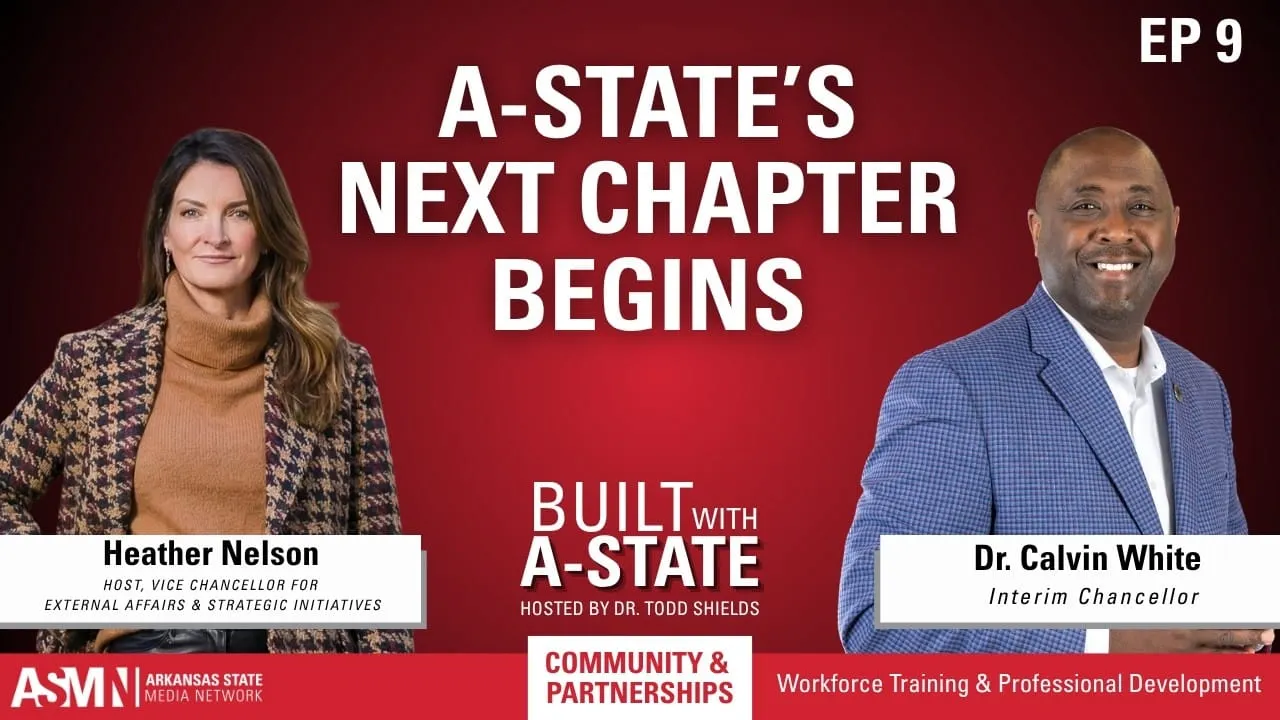
We sit down with Dr. Calvin White Jr., Interim Chancellor at Arkansas State University, to break down the actual operational mechanics of leading a major public university. We get into how the institution achieved five consecutive semesters of enrollment growth by completely revamping its value proposition, modernizing outreach for 16-to-18-year-olds, and creating accessible scholarship pipelines like the Arkansas Promise Plus. Dr. White shares how A-State is expanding its academic footprint by launching the state’s first College of Veterinary Medicine, establishing a seamless "two-plus-two" system partnership with ASU Beebe, and driving research expenditures from fifth to third in the state by partnering directly with key regional industries like steel and agriculture. The core philosophy driving these moves is simple: institutional success comes from blocking out noise, returning to fundamental access, and treating research as a direct R&D arm for local communities.
Stepping into the highest administrative seats means agreeing to a 24/7 commitment that the public rarely witnesses. Success in senior university leadership often requires sacrifice, stepping away from family events, answering emergency calls at midnight, and operating quietly as the engine behind the scenes. Moving from the classroom to the administrative ranks means betting on yourself and relying heavily on the tools earned at every previous level of your career.
If you care about higher education leadership, expanding workforce development, and rural economic access, you’ll get a lot from this episode. Be sure to subscribe to the channel and share this video with colleagues who value practical leadership insight.
What is the biggest operational lesson you've taken from a leader who stepped up during a critical inflection point? Let us know in the comments below!
@ArkansasStateMediaNetwork
More About this Episode
Leading Arkansas State University into a New Era of Accessibility, Innovation, and Growth
I have had the incredible opportunity to sit down with some of the most influential minds guiding the future of our higher education system. The landscape of higher education is shifting rapidly, requiring leaders who are not just administrators but visionaries dedicated to accessibility, rigorous research, and community impact. Stepping into the role of a university chancellor requires a unique blend of experience, resilience, and a profound commitment to student success.
Recently, I had the privilege of exploring the guiding philosophy of Dr. Calvin White Jr., the new interim chancellor of Arkansas State University. His journey in academia spans more than two decades, culminating in a leadership position that is poised to shape the future of the institution. The vision for Arkansas State University is built on a simple yet powerful premise. Higher education must serve the people, providing a transformative experience that remains accessible to everyone regardless of their socioeconomic background.
The Unseen Reality of Higher Education Leadership
There is a common misconception that senior leadership in higher education is a glamorous, effortless endeavor. Often, successful leaders make the job look so seamless that the public underestimates the sheer volume of work required to keep a major university functioning. The reality is far more demanding. Reaching the chancellor's office is rarely a sudden leap. For those who rise through the ranks, it is the result of decades of strategic risk-taking. Transitioning from the classroom as a professor to roles such as program director, department chair, senior-level associate dean, and provost builds a comprehensive skill set. Each of these positions adds different tools to a leader's tool belt, ensuring that by the time they reach the executive level, they are intimately familiar with every facet of the institution.
The day-to-day life of a university chancellor is a relentless, round-the-clock commitment. The day often begins long before dawn, blending personal responsibilities with the urgent needs of the campus. A typical morning might start at 4:30 AM to spend time with family before transitioning immediately into emails, strategic planning, and early morning calls. It is a job where you might be attending a crowded weekend sporting event and suddenly need to step away to handle an urgent administrative crisis.
This requires immense sacrifice, particularly when it comes to family time, earning affectionate titles like "boss dad" from observant children. Yet, the philosophy of effective administration is that if the work is being done correctly, the leadership remains largely invisible to the public eye. The focus remains steadily on maintaining the internal mechanisms that allow the university to thrive and students to succeed.
Reversing the Trend and Achieving Historic Enrollment Growth
One of the most significant challenges facing universities nationwide is declining enrollment. However, Arkansas State University has recently celebrated five consecutive semesters of enrollment growth, a remarkable achievement that follows a decade of consecutive downturns. This turnaround is not a product of luck. It is the result of absolute intentionality, data-driven decisions, and a willingness to critically evaluate existing strategies.
To attract students in today's competitive environment, a university must clearly articulate its value proposition. This means tailoring communication to distinct audiences through a multi-tiered strategy:
- Engaging Policymakers: State leaders and governmental officials must clearly understand the economic and cultural impact of the institution to ensure continued support.
- Reassuring Parents: Families need a guarantee that the university will take their teenagers and mold them into well-rounded, educated young professionals who are ready for the workforce.
- Connecting with Students: The university must meet sixteen to eighteen-year-olds where they are, utilizing modern social media and digital platforms to show them exactly why this campus is the best place to spend their formative years.
A major component of this intentional growth strategy involves rethinking scholarships and financial aid. Rather than solely chasing the highest-achieving scholars, the university has recognized the immense potential in mid-range students. These are capable, driven individuals who, with the right support, will excel academically and contribute significantly to the local economy.
By prioritizing affordability and debt-free graduation, the university protects the financial future of its students. The implementation of the Arkansas Promise Plus initiative exemplifies this commitment. It serves as a financial pledge to the people of Arkansas, ensuring that socioeconomic status does not prevent capable, hard-working students from achieving a collegiate education. Furthermore, the leadership team meets weekly to evaluate these initiatives, maintaining the flexibility to tweak or abandon policies that are not delivering the required results.
Expanding Access Through Online Education
The traditional model of a residential college experience is no longer feasible for everyone. In previous generations, students could work a summer job to fully fund their tuition, a reality that simply does not exist today as costs have outpaced wages. Recognizing this barrier, Arkansas State University has heavily invested in online education, viewing it as a modern necessity rather than a supplementary offering.
Online classes serve as the night classes of the twenty-first century. They take the exact same rigorous academic curriculum found on campus and deliver it directly to working adults and rural residents. For individuals living in distant corners of the state who cannot uproot their lives to commute to a physical campus, online learning is a lifeline. This approach returns to the fundamental basics of public education. It is about reaching individuals where they are and removing the geographical and logistical barriers to learning. This commitment to wide-reaching accessibility is a core element of the institution's mission to serve all citizens, regardless of their zip code.
Building a Destination College of Veterinary Medicine
Another monumental leap forward for Arkansas State University is the establishment of its new College of Veterinary Medicine. For decades, aspiring veterinarians in the region had to leave the state to pursue their education, resulting in a severe brain drain. Today, there are over a dozen counties in Arkansas without a single practicing veterinarian. The creation of this program transforms the university into a premier destination for veterinary science and directly addresses a critical shortage in the local workforce.
The demand for this program has been overwhelming, with well over a thousand applications received for an inaugural class of just one hundred and twenty seats. This staggering level of interest underscores the critical need for veterinary education within the state. To maximize this impact, the university has established a specialized partnership with ASU Beebe to create a two-plus-two program. This pipeline allows students to complete foundational veterinary technician coursework before seamlessly transitioning into the doctoral program, expediting their entry into the professional workforce.
Looking ahead, the university has finalized the infrastructure for a Freshman to Vet program. Similar to the highly praised Freshman to Physician pathway, this initiative will allow dedicated undergraduates early access to the College of Veterinary Medicine. By educating veterinarians locally, the university significantly increases the likelihood that these professionals will return to serve their home communities, ensuring that agricultural and domestic animal care needs are met across the region.
Elevating Research and Industry Partnerships
A thriving university does not merely disseminate knowledge; it actively creates it. Arkansas State University has strategically elevated its research profile, rapidly advancing from fifth to third in state research expenditures. This upward trajectory is fueled by a deliberate allocation of institutional resources, empowering brilliant scientists and engineers to pursue high-level federal funding, including multi-million dollar grants from the USDA.
The research conducted on campus is deeply intertwined with the needs of the surrounding community and local industries. The return on investment is substantial, with internal funding yielding exponential returns in grant money. More importantly, the research has practical, real-world applications:
- Public Health Initiatives: University biologists are actively collaborating with local city officials to conduct critical mosquito research, directly improving community health and pest management.
- Agricultural Advancement: Campus scientists are pioneering research in rice production, supporting one of the state's most vital economic exports.
- Industrial Innovation: The university serves as the primary research and development arm for major regional industries, including state transportation departments and massive steel manufacturing plants.
By aligning academic research with corporate and civic needs, the university ensures its students are trained on cutting-edge technology while simultaneously driving economic growth. Industry leaders view the university as an indispensable partner in innovation, proving the incredible value proposition the institution offers to the entire region.
The Introverted Leader and a Legacy of Service
Behind the public speeches, the high-stakes decisions, and the relentless schedule is a leader driven by a deeply personal mission. While the role of a university chancellor demands a high degree of public engagement, true restoration often happens away from the crowds. Many people are surprised to learn that successful public figures can be naturally introverted. Finding balance often requires quiet downtime accompanied by a good book, jazz music, and a chance to decompress. This measured, contemplative temperament allows for thoughtful decision-making, particularly in times of institutional crisis.
When contemplating the long arc of a career in higher education, the desired legacy is rarely about job titles, corner offices, or accolades. It is about a fundamental, unwavering commitment to service. For a leader who grew up with limited means, the ultimate goal is to be remembered as someone who used higher education as a vehicle to give back to a state that provided immense opportunities. It is about ensuring that the ladder of opportunity remains firmly in place for the next generation.
Education remains the great equalizer. Arkansas State University stands at a thrilling inflection point. With sustained enrollment growth, groundbreaking new academic programs, and a thriving research sector, the foundation has been laid for decades of success. As the university continues to honor its core mission of serving the people, it solidifies its place as an indispensable engine of progress, innovation, and opportunity for everyone it touches.