
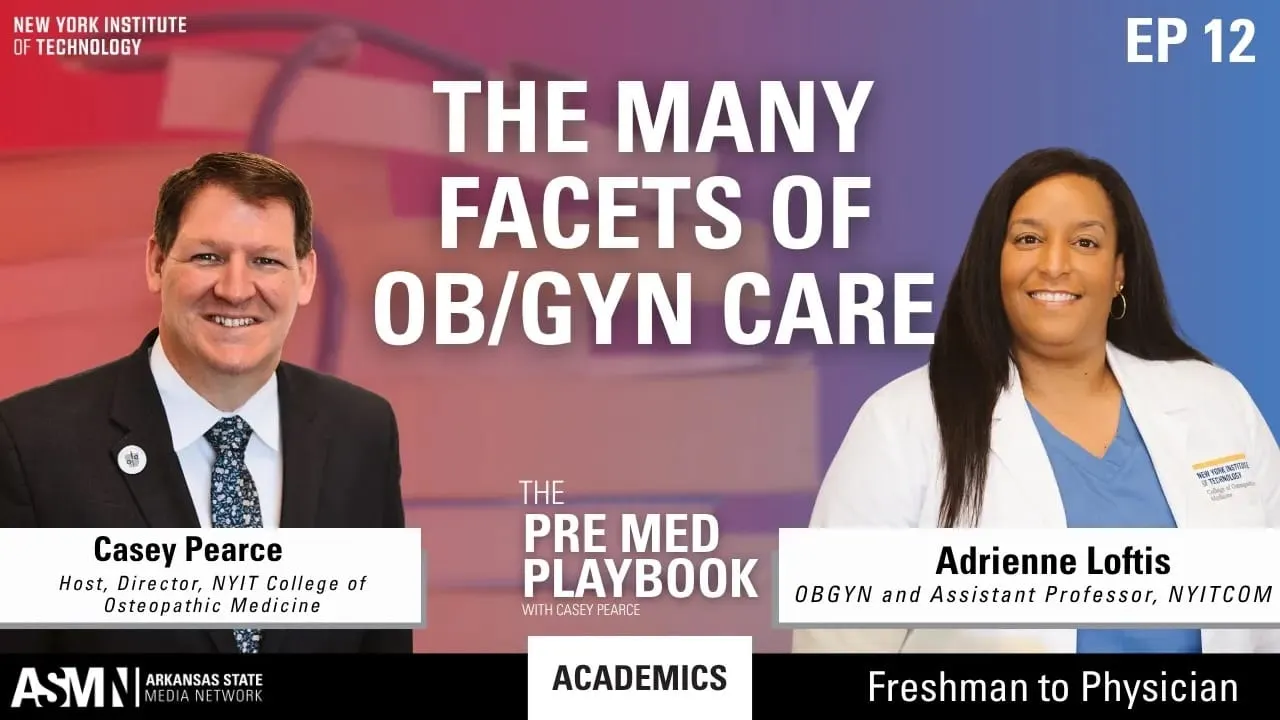
The shrinking number of residency spots is colliding with a growing maternal health crisis. Dr. Adrienne Loftis breaks down the mechanics of pursuing a career in OBGYN today.
OBGYN blends the fast-paced demands of surgical intervention with the long-term continuity of primary care. Dr. Loftus examines the causes of modern maternal health deserts and explains why securing a residency slot demands strategic planning during your first year. She outlines the operational loads residents face, from 24-hour call shifts to managing clinical presentations outside standard reproductive health.
For early medical students trying to differentiate their residency applications, this conversation provides a structural blueprint to navigate the match process. Subscribe and share this episode with a classmate mapping out their clinical rotations. What specific subspecialty are you aiming for, and what hurdles are you hitting in your early preparation?
More About this Episode
Exploring the Path to Becoming an OBGYN and the Future of Maternal Health
Choosing a medical specialty is one of the most significant decisions an aspiring physician will ever make. It dictates not only their daily professional life but also the specific ways they will impact their communities. Within the vast landscape of medical disciplines, maternal health stands out as one of the most pressing and widely discussed topics today. The need for highly skilled, compassionate doctors specializing in obstetrics and gynecology has reached a critical peak, particularly in rural regions and states like Arkansas. As educators and advocates within the medical community, we recognize that preparing the next generation of physicians to care for our mothers, sisters, and daughters is a profound responsibility.
The journey to becoming an OBGYN is rarely a straightforward path. Many medical students enter their education with a rigid plan, only to discover their true calling in an unexpected place. A prime example of this evolution is the transition from non-traditional undergraduate degrees to specialized medical practice. Some of the most effective physicians start their careers in entirely different fields, such as zoology or forensic science, or spend years working on the frontlines in emergency rooms. In fast-paced environments like the ER, healthcare professionals often experience a fragmented version of patient care. A patient is treated for an immediate crisis and then discharged, leaving the provider wondering what happened to them next. For many future OBGYNs, the desire for long-term continuity of care becomes a driving force. They want to follow a patient through various stages of life, building a relationship that spans decades.
Furthermore, representation in medicine plays a massive role in specialty selection. Many young aspiring doctors look at the current healthcare landscape and notice a distinct lack of physicians who look like them or share their cultural background. This is particularly vital in women’s healthcare, where trust and mutual understanding are the bedrock of effective treatment. Recognizing this gap often inspires medical students to step into the OBGYN specialty, ensuring that future generations of women have access to doctors who can relate to their lived experiences on a personal level.
There is a common, oversimplified misconception that being an OBGYN is simply about delivering babies. While obstetrics is unique in that it is the only medical practice centered around a completely natural physiological process, the specialty is incredibly expansive. Obstetrics and gynecology is, at its core, a primary care specialty combined with complex surgical expertise. For a significant portion of the population, an OBGYN is the only physician they will see in a given year. Because of this, these specialists must be prepared to manage much more than reproductive health. They are routinely tasked with evaluating cardiovascular health, managing high blood pressure, diagnosing common ailments, and addressing urgent mental health crises.
This comprehensive approach aligns perfectly with the tenets of osteopathic medicine, which emphasizes treating the whole patient rather than just isolated symptoms. An OBGYN must look at the complete picture of a woman's health, understanding how various systemic issues intersect with reproductive care. At the same time, the field is deeply surgical. Beyond the clinical setting, OBGYNs perform a wide array of procedures ranging from in-office treatments to advanced, minimally invasive robotic surgeries and major pelvic reconstructions. It is a demanding specialty that requires a physician to be a skilled diagnostician, a compassionate counselor, and a precise surgeon all at once.
Despite the profound need for these specialists, the field is facing a unique set of modern challenges. Across the country, we are witnessing the alarming growth of maternal health deserts. These are regions where community hospitals, often burdened by financial constraints, are closing their labor and delivery wards. This forces expecting mothers to travel dangerous distances to receive basic prenatal and emergency obstetric care.
Simultaneously, there is a bottleneck in medical education. While new medical schools are opening to combat the general physician shortage, the number of residency program spots specifically for obstetrics and gynecology has not increased at a proportionate rate. This disparity has transformed OBGYN into a highly competitive specialty. We currently have a surplus of passionate, capable medical students who desperately want to return to their rural hometowns to provide maternal care, but they face significant statistical hurdles in securing the necessary four-year residency training.
Addressing this crisis goes beyond simply training more doctors; it requires taking healthcare directly to the people. Patient education is a cornerstone of improving maternal health outcomes. Physicians simply do not always have enough time during a standard clinic visit to thoroughly educate patients on the complexities of their health. This is why community outreach is so vital. By hosting educational events and pop-up clinics in underserved areas, medical professionals can bridge the knowledge gap. Whether discussing the nuances of menopause, the realities of postpartum depression, or the complications that can arise during pregnancy, empowering women with accurate medical knowledge is a critical step in transforming public health.
For those medical students who do successfully navigate the match process and enter an OBGYN residency, the training is famously rigorous. The initial four years consist of heavy clinical duties, complex surgical rotations, and grueling night and weekend shifts on the labor and delivery floor. However, upon completing this general training, physicians have the opportunity to tailor their careers through various highly specialized fellowships.
These subspecialties allow doctors to focus on the exact areas of women’s health they are most passionate about. Reproductive Endocrinology and Infertility is a three-year fellowship focused on helping patients overcome complex conception challenges and managing endocrine disorders related to the thyroid and pituitary glands. Maternal Fetal Medicine, another three-year path, trains doctors to manage high-risk pregnancies and severe maternal complications. Those interested in advanced surgical techniques can pursue a fellowship in Minimally Invasive Surgery, mastering laparoscopic and robotic procedures. Additionally, there are crucial paths like Gynecologic Oncology, focused on treating reproductive cancers, and Pelvic Medicine and Reconstructive Surgery, which addresses severe pelvic floor disorders.
Navigating the journey from a premed undergraduate to a specialized surgeon requires meticulous, strategic planning. The pace of medical school is relentless, and students cannot afford to wait until their clinical rotations to decide on their future. Aspiring physicians must begin mapping out their career trajectories early in their medical education. This means actively researching different specialties, making detailed lists of pros and cons, and engaging in honest self-reflection about the type of life they want to lead.
Lifestyle considerations are a completely valid and necessary part of this planning process. The reality of being a general OBGYN often involves unpredictable hours, twenty-four-hour on-call shifts, and high-stress emergencies. While the medical field is slowly evolving to include more shift-based models to promote physician well-being, the demands remain high. Students must prioritize their own long-term health and career sustainability when choosing their path. Keeping options open, maintaining high academic performance, and understanding the physical and emotional toll of the specialty are all critical components of a successful medical journey.
Ultimately, the most powerful tool an aspiring physician can utilize is mentorship. The medical profession is built on a foundation of paying it forward. No successful doctor navigated the grueling path of medical school, board exams, and residency applications entirely on their own. Finding a mentor who can provide tailored guidance, assist with professional networking, and offer an unfiltered look into the realities of the profession is invaluable.
Many physicians eventually transition into academic medicine specifically for this reason. They want to give back to the next generation of healers, sharing the lessons they learned and helping new students avoid common pitfalls. For premeds and current medical students, seeking out these mentors should be a top priority. By asking questions, absorbing advice, and actively planning their educational steps, future doctors can position themselves to not only succeed in their careers but to make a massive, lasting impact on the landscape of maternal healthcare. The challenges in women's health are significant, but with dedicated, well-guided professionals entering the field, the future of patient care remains incredibly bright.