
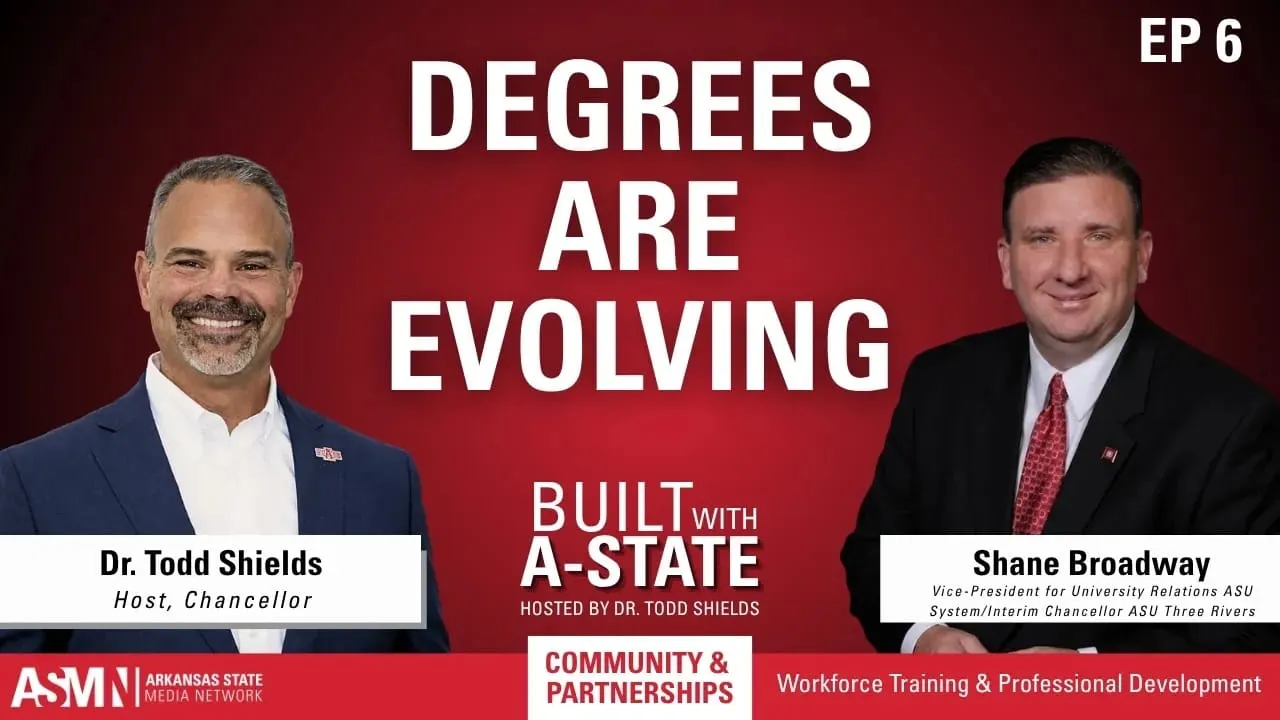
Traditional higher education models face a significant talent leak when they fail to adapt to rapid regional economic shifts. With changing student demographics and immediate economic pressures, educational institutions must look past rigid four-year structures to remain essential drivers of regional growth. In this episode, host Todd Shields sits down with Shane, Vice President for University Relations for the ASU System and Chancellor of ASU Three Rivers, to discuss the critical intersection of public policy, campus leadership, and industrial workforce development.
We sit down to examine the systemic adjustments required to bridge the gap between academic programming and direct corporate labor needs. Our conversation dives into the tactical deployment of stackable credentials, the execution of specialized workforce training partnerships with corporations like Dassault Falcon Jet, and how the "Big Six" state budget priorities heavily dictate institutional funding pathways. Shane highlights his core leadership philosophy: sustainable regional prosperity depends entirely on building flexible, lifetime educational on-ramps rather than enforcing an all-or-nothing approach to enrollment.
Constructing these agile pipelines requires intense coordination, enduring the friction of legislative term limits, and actively breaking down fragmented media silos that keep local success stories hidden from the public. Viewers will walk away with a functional blueprint for how modern higher education can partner directly with industry leaders to support workers at any stage of their career lifecycles.
If you care about economic mobility, workforce adaptation, and public policy collaboration, you’ll get a lot from this. Please remember to subscribe, like, and share this episode to support the network. What is the single biggest barrier your local industry faces when trying to source trained talent? Let us know in the comments below.
@arkansasstatemedianetwork.com.