
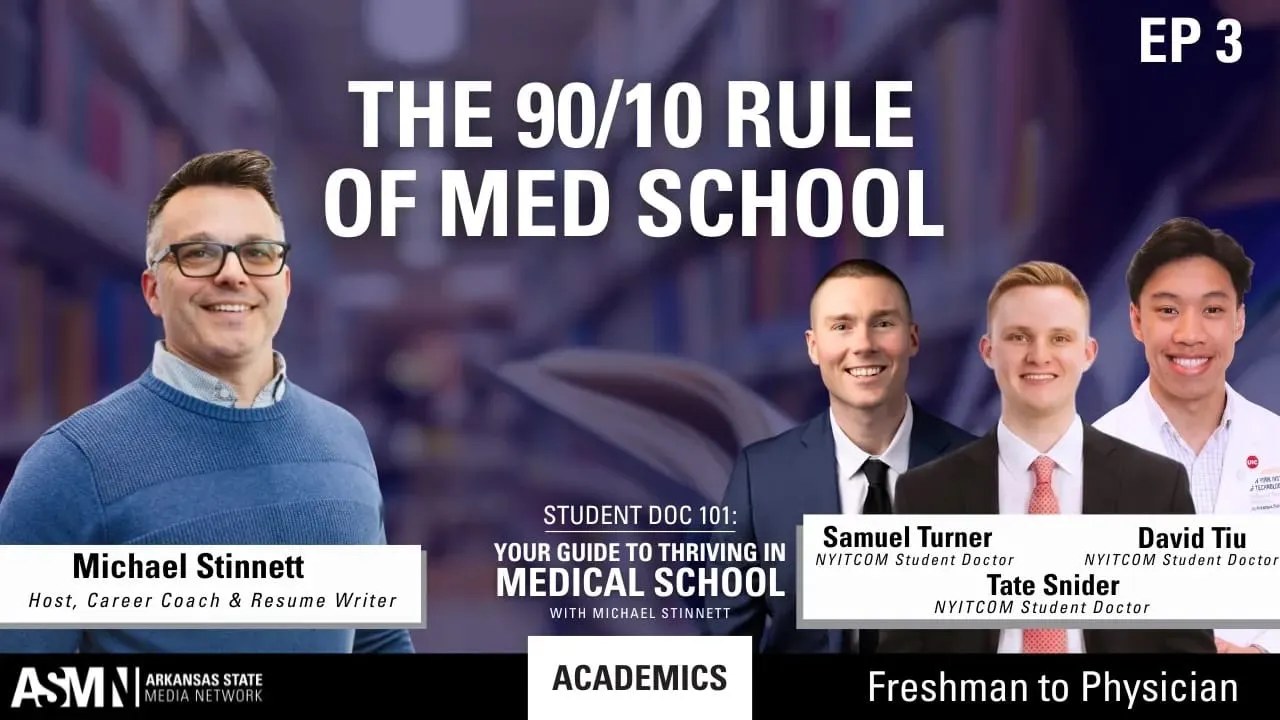
You can be driven, smart, and deeply called to medicine and still feel thrown off when med school gets uncomfortable. That’s why I sit down with three student doctors, Sam Turner, Tate Snider, and David Tiu, for an honest talk about what thriving in medical school really looks like when the workload is heavy, the learning curve is steep, and your confidence takes hits.
We start with the real stories behind their paths into medicine, then get practical about osteopathic medicine, OMM, and why palpatory skills and a strong physical exam can set you apart on rotations. We also talk about NYITCOM's mission at Arkansas State, rural health disparities in the Mississippi Delta, and what programs like the Delta Caravan and the Delta Population Health Institute (DPHI) teach you about social determinants of health and the healthcare system beyond the textbooks.
From there, we dig into the most useful stuff for day-to-day survival: the surprise that med school can actually be fun, the power of camaraderie, and why isolating yourself makes everything harder. You’ll hear how they think about efficiency vs grinding, how to “earn” time off without falling behind, and why the best hack for getting comfortable with discomfort is simply doing the work and letting practice scores guide you instead of defining you. We close with one-sentence takeaways on becoming a good doctor and staying human while you do it.
If this helped you, subscribe, share it with a classmate, and leave a review so more students can find it. What’s the hardest part of med school for you right now? @Arkansasstatemedianetwork.com.
More About this Episode
Student Doc 101: Navigating the Challenges of Medical School
In the latest episode of “Student Doc 101”, Michael Stinnett, a medical education learning specialist at NYITCOM at Arkansas State University, sits down with student doctors Sam Turner, Tate Snider, and David Tiu.
The conversation provides a raw and insightful look at the realities of medical school, from the initial anxiety of orientation to the triumph of matching into a dream residency.
Diverse Paths to Medicine
The panel highlights that there is no standard route to medical school. Turner was driven by a competitive spirit fostered by three older brothers; Snider found his calling through oncology volunteer work after a junior year pivot; and Tiu was inspired by a Filipino household filled with nurses and a famous "Instagram doctor."
Despite their different origins, all three chose Osteopathic Medicine (DO). They emphasized that DO programs offer a unique advantage through:
- A Holistic Approach: Treating the person, not just the symptoms.
- Palpatory Skills: Developing advanced hands-on diagnostic abilities early in the curriculum.
- Scope of Practice: Clarifying that DOs can practice any medical specialty that MDs can.
Embracing Desirable Difficulties
A core theme of the discussion was the concept of desirable difficulties. The guests explained that learning is often most durable when it is uncomfortable.
Strategies for the Struggle:
- Normalize the Discomfort: Snider noted that feeling the jitters is a sign of growth, not a lack of ability.
- Brute Force vs. Efficiency: While Turner initially isolated himself to study, he eventually shifted toward efficiency, allowing time for golf and social connections.
- Mind and Body Readiness: Tiu advised incoming students to enter med school at their peak health and happiness to withstand the growing pains of the first semester.
Overcoming Isolation through Camaraderie
Medical school is notoriously intense, which can lead students to isolate themselves. The guests argued against this, noting that:
- Trauma Bonding is Real: The relationships built during the lowest lows of med school often last a lifetime.
- Study on Campus: Even during independent study time, being around peers provides a sense of community that prevents burnout.
- Maintain Your Identity: Michael reminded listeners to keep anchor activities like the gym, church, or hobbies to avoid losing themselves in the books.
Finding the Off Switch
Success in medical school requires knowing when to step away. The guests shared their favorite binges for unwinding:
- Turner: Golfing and the occasional game of Fortnite.
- Snider: Spending time with his wife and analyzing the stock market (preparing a "residency portfolio").
- Tiu: Watching anime, tennis highlights, and the medical drama The Pit.
As the episode concluded, the message was clear: While medical school is undeniably hard, it is also a period of immense joy and friendship for those who approach it with the right mindset and a community of peers.